
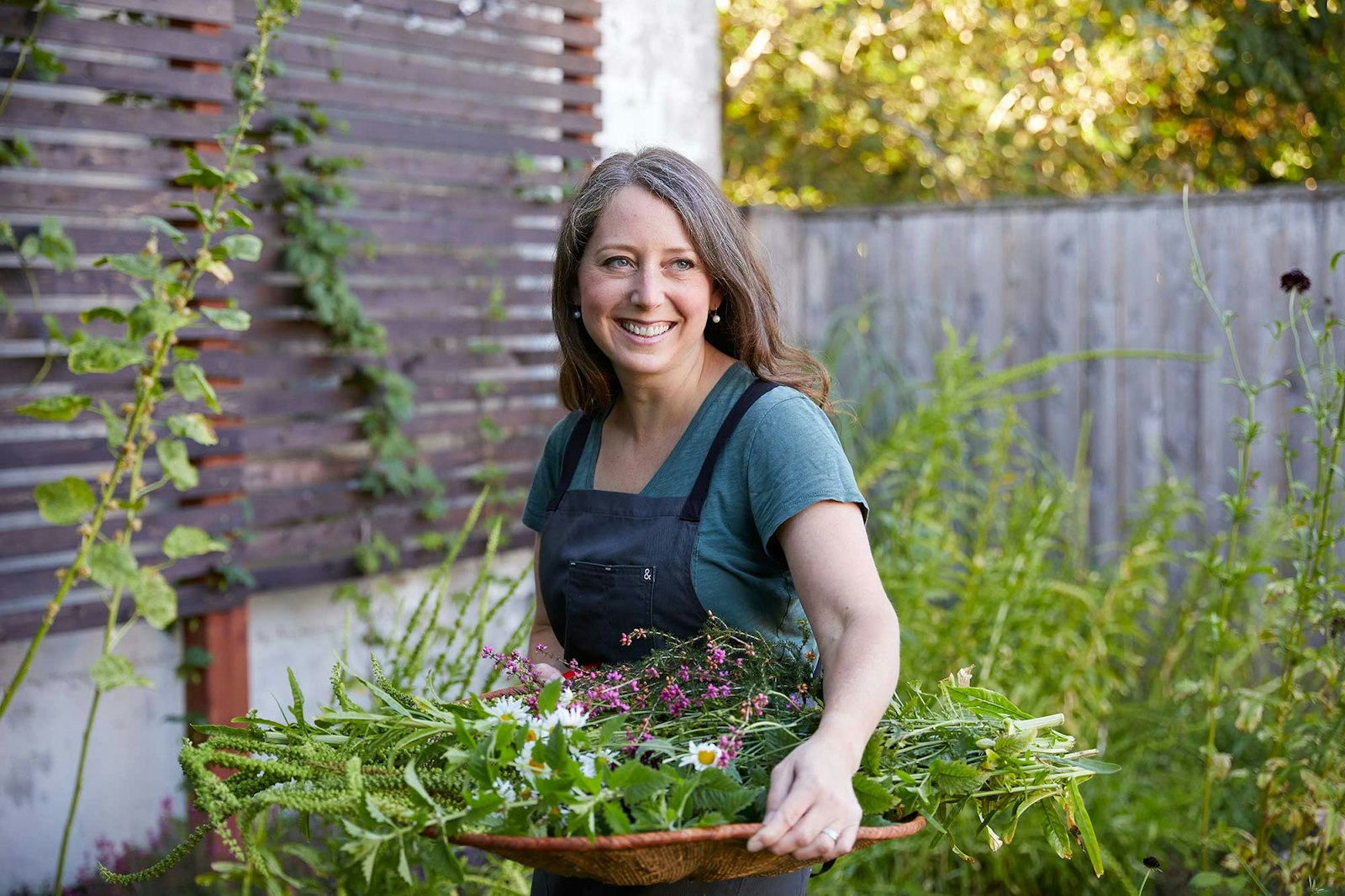
Emily Lymm of Wool & Palette, based in Portland, Oregon, speaks of “refining her voice” as a natural dyer. “When I first began dyeing, I worked only with whole dyestuffs—flowers, bark, leaves, and roots. I still use whole logwood chips and weld grown in my garden. But over time, I have transitioned mostly to natural dye extracts,” Emily says. When she first started her dye garden, Emily grew at least 10 different dye plants, but over time edited it down to those that grow well and provide her with reliable, saturated color.
 The Leaves and More Leaves Shawl in the Spring 2026 issue of Farm & Fiber Knits features Emily‘s Fern colorway. Photo by Gale Zucker
The Spring 2026 issue of Farm & Fiber Knits features some of Emily’s fingering yarn in the Leaves and More Leaves Shawl by Carolyn Wyborny. Our staff has been enthralled with the beautiful green Carolyn used—Emily’s Fern colorway. We know that Emily used a combination of logwood and weld, with logwood typically producing a purple and weld resulting in a bright yellow. So how did she end up with this beautiful mossy green color? Follow along as we learn more about Emily’s processes, her journey into natural dyeing, and how she came up with the most curious Fern colorway.
 Shaniko Wool Company was the first farm group in the United States to receive Responsible Wool Standard certification. The group’s ranches are the first step in an audited, traceable supply chain. Photo courtesy of Shaniko Wool Company
Sustainable Sourcing
Sustainability has guided Emily’s fiber sourcing from the beginning. In 2020, she connected with Jeanne Carver of the Shaniko Wool Company, whose commitment to traceability, regenerative ranching, domestic processing, and Responsible Wool Standard certification aligned perfectly with her philosophy. Shaniko’s wool is sourced and processed in the US, producing yarn that is beautiful, soft, bouncy, and luxurious, according to Emily.
More recently, Emily began working with British Bluefaced Leicester sourced through Woolkeepers in the UK, a network focused on small growers and fair compensation. She is very particular about softness, durability, and traceability, and finds that Bluefaced Leicester’s larger, flatter scales reflect light beautifully, giving the resulting dyed color a feeling of depth and dimension. “It makes my job easier; I am not mad about that.”
 Emily in her backyard dye garden holding a jar of dried coreopsis flowers. Photo by Amaren Colosi
The Art—and Science—of Developing Saturated Colors
Though her journey began with whole dyestuffs, over time Emily has shifted toward using mostly natural dye extracts for their efficiency and consistency. Whole dyestuffs require steeping, straining, reheating, and often multiple extractions to achieve full color, making them variable and time-consuming. But extracts allow Emily to create repeatable shades from batch to batch—an essential quality when building a cohesive color palette.
Emily says studying dye chemistry has been an essential part of her process. For example, a weak mordant will waste dye, too much heat can dull the color, and too much time can shift the tone or cause unevenness.
I asked Emily how she achieves such deep, saturated colors, and how long it takes, on average, to dye each skein. “Every color in my line serves a specific role in the palette—it has to earn its place. I spend a great deal of time developing recipes,” she says. “Depth comes from patience and layering. I mordant slowly and cold for four to five days. This allows the fiber to fully absorb the mordant so the dye can properly and evenly bond. From there, I control temperature, time, and concentration very carefully.”
Click on each image below to get a closer look and learn more.
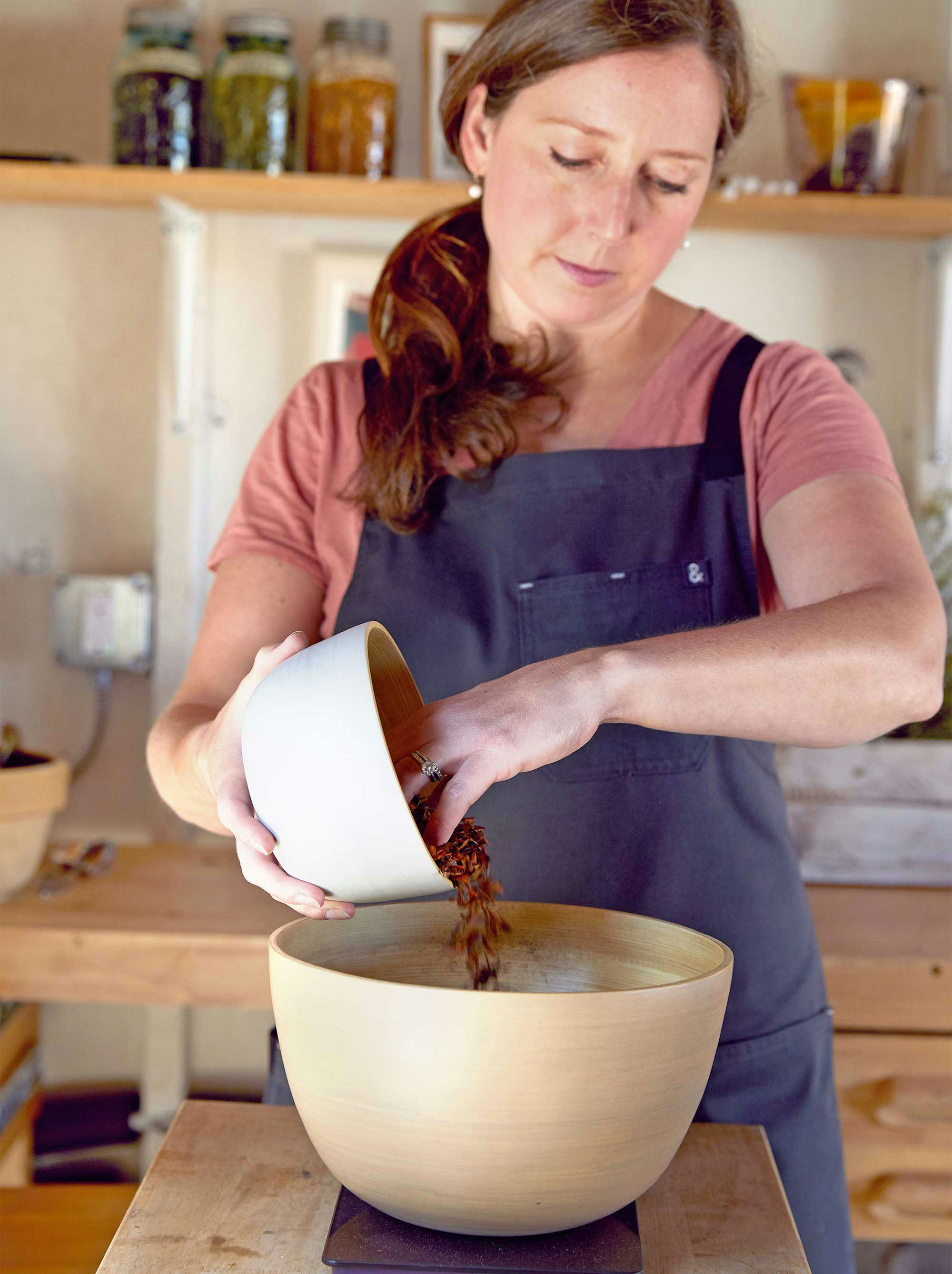
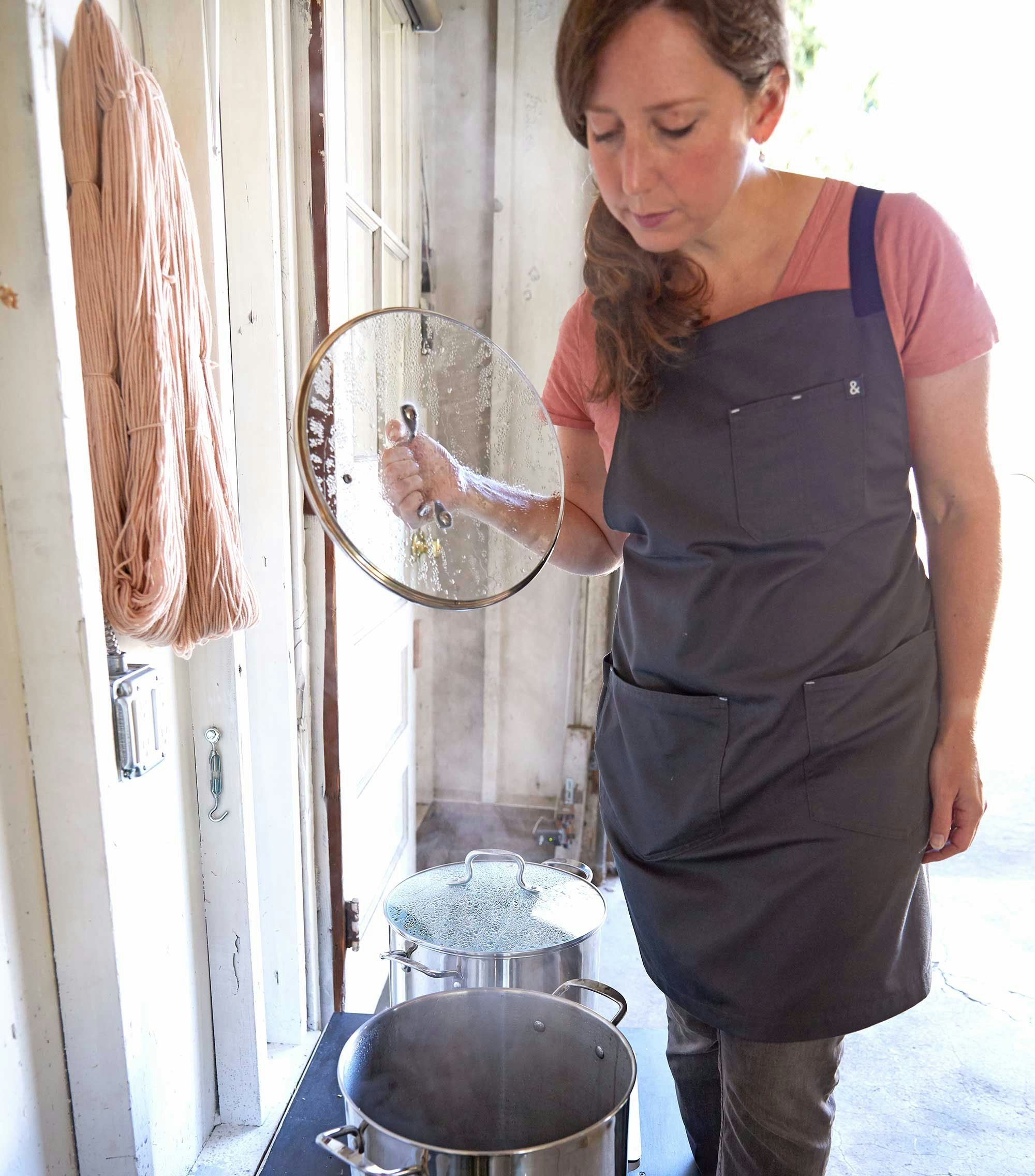
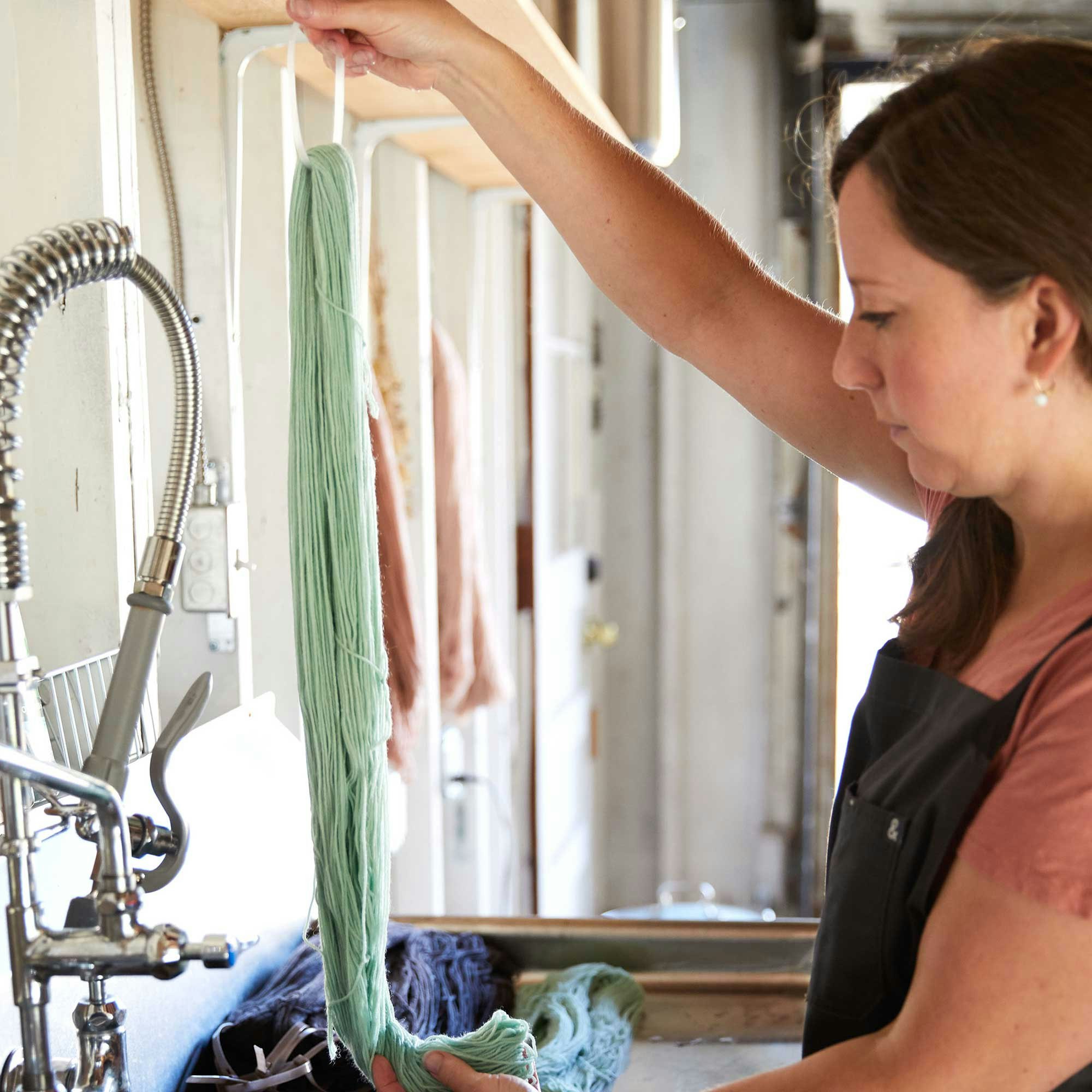
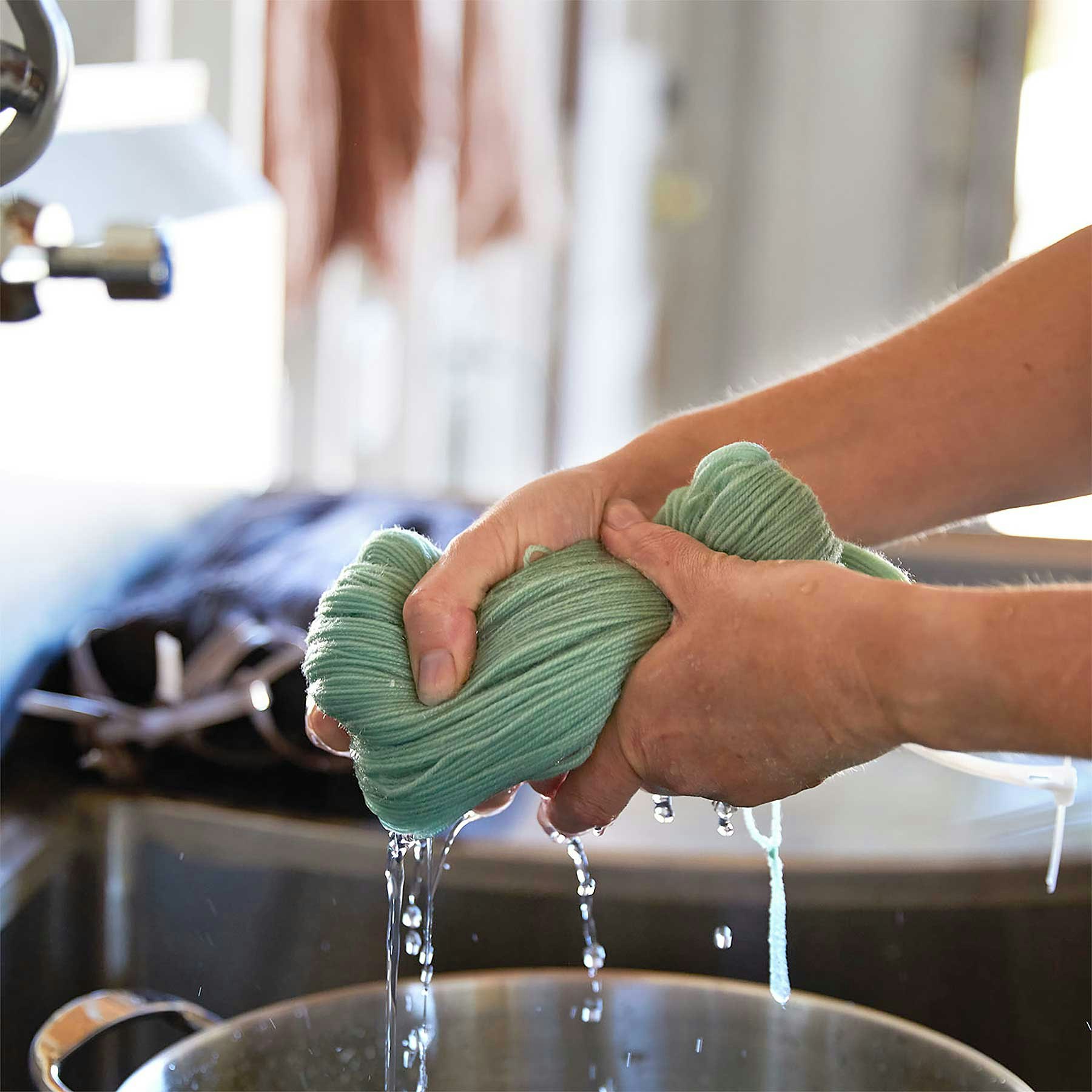
Most of Emily’s colors take about seven days from start to finish, with the mordanting process taking four to five days. “Some colors I can dye in a single day. Others take two or three days of layering. I work in batches of forty skeins. Forty skeins per week is my realistic maximum. I have tried to push beyond that. It usually results in mistakes or physical burnout. Slow and steady produces better color.”
When asked how long it takes to develop a new shade using a mix of botanical materials, Emily says it always takes longer than she expects. Her recent Auburn required thirteen documented trials, with adjustments to mordants, dye percentages, temperature, and layering sequence. The skein-level development alone took two to three weeks, and scaling up demanded further refinement.
Fearless Experimenting
When I asked Emily what one of the strangest materials is that she’s ever used to create a dye color, she relayed one memorable experiment that involved amaranth from her garden, steeped in sun-warmed water for several days. Emily ended up achieving a vivid hot pink, which felt magical to her. Though beautiful, the color unfortunately faded over time.
Emily’s early trials included birch wood chips from a neighbor’s tree, cherry bark, wild cherries mistaken for pokeberries, foraged St. John’s wort, and even lichen from her own maple tree, which turned out to be messy and underwhelming. Not every experiment earns a permanent place in the palette.
Do surprises still occur? Emily says, yes! “Usually when I get overconfident.” In one attempt to create a periwinkle using cochineal, she pushed the pH too far with soda ash. The wet yarn appeared promisingly purple, but after washing, much of the color disappeared. The soda ash had effectively acted like soap.
Click below to view each image in full-screen mode.
Fern: The Most Demanding Recipe of All
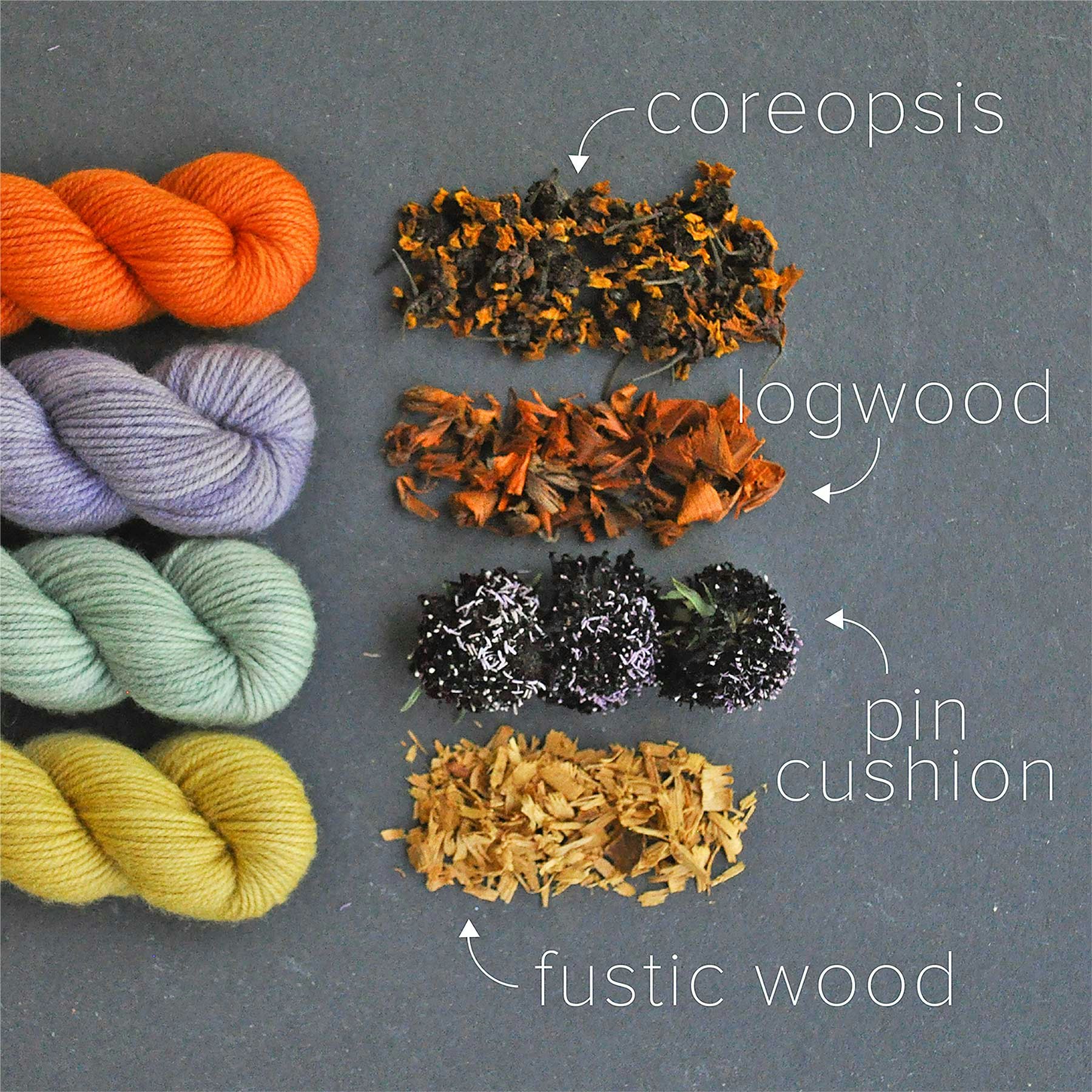
So, how did Emily come up with her Fern colorway featured in the Leaves and More Leaves shawl? “I begin with an alum mordant. Then I dye with weld to build a bright, lemon yellow. If the yellow is uneven or weak, the entire process suffers. Working with whole plant material requires careful steeping and temperature control."
 Emily‘s Fern colorway required a balance of careful steeping, temperature control, and the right amount of logwood, weld, and iron. Photo by Gale Zucker
“Next comes logwood. Purple over yellow creates a pretty underwhelming brown. It isn’t until you over mordant with just a tiny percentage of iron that the fiber turns green. Weld and iron alone can create a lighter green. For me, it lacks depth. The logwood adds body and complexity.”
Emily sums up her approach like this: “Natural dyeing keeps me attentive. It forces me to be patient. It does not let me coast. I think that is part of its beauty.”
Resources
Learn more about Emily and see her line of naturally dyed yarn at woolandpalette.com.
Listen to the Long Thread Podcast featuring Emily Lymm.
Learn more about Shaniko Wool and their responsible wool journey.
Get the pattern for the Leaves and More Leaves Shawl in the Farm & Fiber Knits Library.