Subscriber Exclusive
Sock Tips: How to Modify Afterthought Heels for a Better Fit
High arches often mean that beautiful handknit socks are uncomfortable and rarely get worn—until you adjust the heel depth to create the extra room your foot actually needs.
High arches often mean that beautiful handknit socks are uncomfortable and rarely get worn—until you adjust the heel depth to create the extra room your foot actually needs. <a href="https://farmfiberknits.com/sock-tips-how-to-modify-afterthought-heels-for-a-better-fit/">Continue reading.</a>
https://farmfiberknits.com/cdn-cgi/image/format=auto/https://www.datocms-assets.com/101500/1762822583-wanderlust-socks-detail.jpg?auto=format&w=900
When I first started knitting socks, I had a hard time making them to fit my feet. They were wearable, but just barely—they were always tight across the top of my foot at the ankle. Worse, they were difficult to put on, which means I rarely wore them. Unwearable FOs are incredibly disheartening, and I gave up on socks for a while.
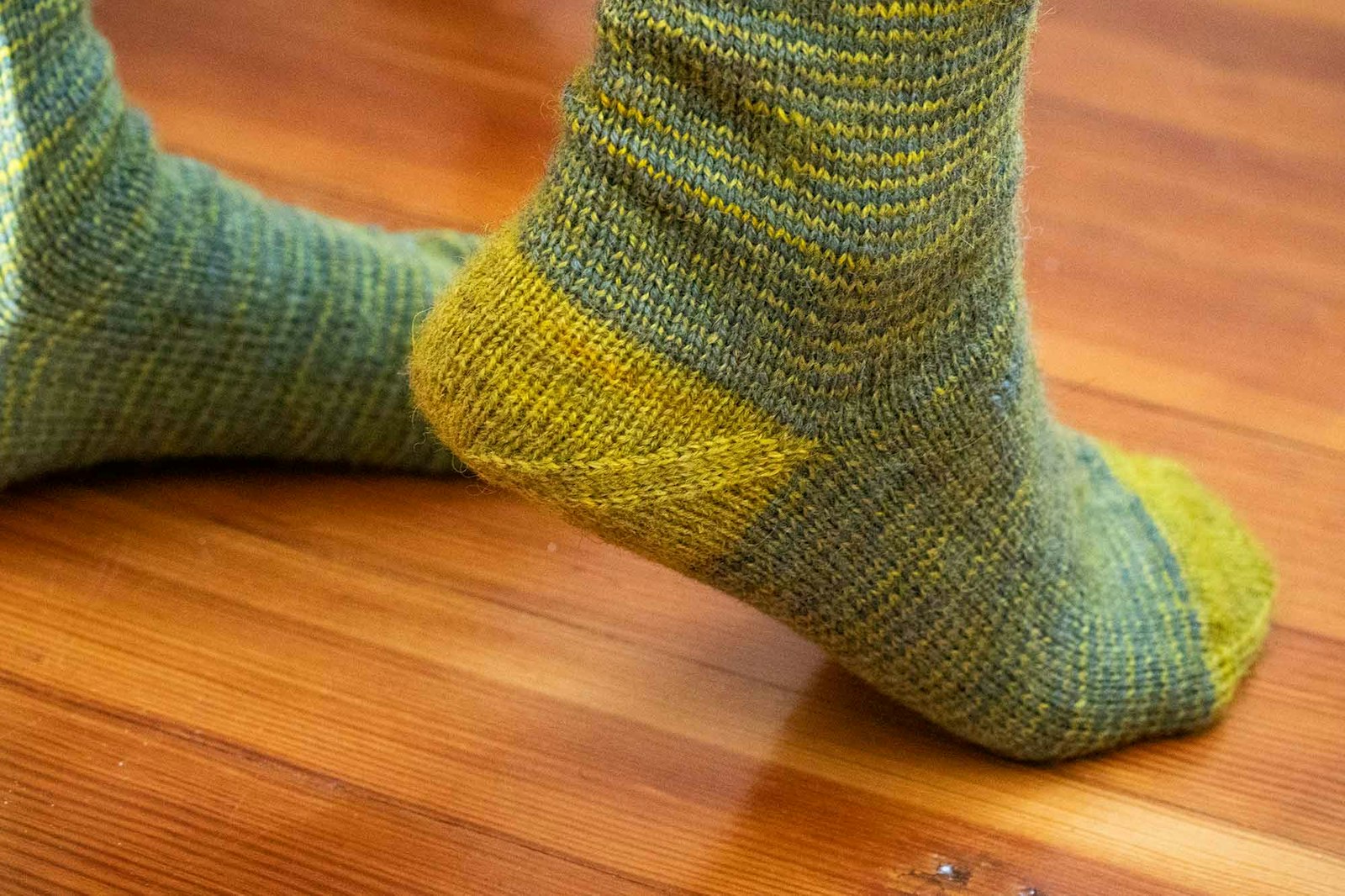
 Modifying the rows in an afterthought heel, like in the Cymru Socks shown here, can make for a better fitting sock for someone with high arches.
I complained to my friend Amy (an avid sock knitter) that my knitted socks never fit and I really didn’t think sock knitting was for me. After listening to my woes, she said, “I think you have a high instep. Have you tried adjusting your pattern to fit?” I had no idea what kind of instep I had or how to adjust my socks! She proceeded to explain and sketch out what a high instep looks like, and how to modify a sock pattern to fit accordingly.
 An average instep (left) and a high instep (right). Illustrations by Laura Hulslander
SUBSCRIBER EXCLUSIVE
When I first started knitting socks, I had a hard time making them to fit my feet. They were wearable, but just barely—they were always tight across the top of my foot at the ankle. Worse, they were difficult to put on, which means I rarely wore them. Unwearable FOs are incredibly disheartening, and I gave up on socks for a while.
Modifying the rows in an afterthought heel, like in the Cymru Socks shown here, can make for a better fitting sock for someone with high arches.
I complained to my friend Amy (an avid sock knitter) that my knitted socks never fit and I really didn’t think sock knitting was for me. After listening to my woes, she said, “I think you have a high instep. Have you tried adjusting your pattern to fit?” I had no idea what kind of instep I had or how to adjust my socks! She proceeded to explain and sketch out what a high instep looks like, and how to modify a sock pattern to fit accordingly.
An average instep (left) and a high instep (right). Illustrations by Laura Hulslander
[PAYWALL]
In socks, the instep is the section that goes from the top of your heel to the top of your foot. Since it’s hard to identify the top of your heel, I tend to think of the heel and instep together as the part of your foot with the largest circumference—usually around the back of your heel and up over the instep. If you have a high instep, you need a greater circumference around that section. Depending on the type of heel your pattern calls for, you can adjust that circumference accordingly. For socks with a heel flap, you simply make a longer heel flap. I tried it out, and conceded that Amy was right—I just needed to make a basic adjustment and my socks would fit me! I, too, became an avid sock knitter and have made many pairs.
 Laura calculates the instep by measuring around the back of the heel to the top of the foot.
But what about afterthought heels?
Then I discovered self-striping yarns. They’re so fun and colorful and do all the work for you! However, if you use a heel flap with self-striping yarns, the stripes get all messed up. The stripes end up being different widths as the sock changes circumference through the gusset. I didn’t care for this, so I started using a pattern with an afterthought heel like the Wanderlust Socks. You knit a tube until you get to the heel section, work half a round with waste yarn, then continue knitting a tube. It’s all the same circumference, so no wonky stripes! (Added bonus—a long tube doesn’t require any thought, so it makes for excellent knitting during work meetings.)
 The Wanderlust Socks use an afterthought heel and are perfect for using self-striping yarns. Photo by Matt Graves
It took me a while to figure out how to adjust an afterthought heel for my feet. I tried using more stitches in my heel, using less stitches in my heel, etc. I finally figured out a solution that was easy and worked well for me—adding length to the heel before starting the decreases.
After picking up the heel stitches, I work about ½" even before the first decrease round. This creates a deeper heel and increases the circumference around the instep.
 Left: This is how afterthought heels are typically worked—pick up the heel stitches, and immediately start decreasing. Right: Adding a few extra rounds before the decreases creates a deeper heel, making them fit better for high insteps. Illustrations by Laura Hulslander
Once I figured out how to make a deeper afterthought heel, my stripey socks fit as well as my heel-flap socks. I’ve been on a striped-sock kick ever since!
What modifications do you make to your socks?
— Laura
Find these patterns that use an afterthought heel in the Farm & Fiber Knits Library:
More sock fun: